
Procedure
Radiofrequency ablation.
Interrupting the small nerves that carry pain from an arthritic joint — after diagnostic blocks have confirmed they are the ones responsible.
What it is
Radiofrequency ablation uses radio waves delivered through a needle to generate heat at the tip, interrupting the small sensory nerves that carry pain signals from a specific joint. In the spine these are the medial branch nerves supplying the facet joints; in the knee they are the genicular nerves.
These are sensory nerves. They carry pain information from the joint — they do not power your limbs. Ablating them does not fix the arthritis; it quiets the signal that arthritis is producing.
The procedure is never done speculatively. Diagnostic medial branch blocks come first: numbing those specific nerves and seeing whether your pain goes tells us whether they are the ones carrying it. Most insurers require this too, and it is good practice regardless.
Candidates
Who this is for
- Facet-mediated lower back pain confirmed by diagnostic blocks
- Neck pain and cervicogenic headache from cervical facet joints
- Knee osteoarthritis pain, including advanced arthritis
- Patients who got good but short-lived relief from diagnostic blocks
How it works
The appointment, step by step.
-
01
Before
You will have had one or two diagnostic blocks confirming the target. Blood thinners may need holding — tell us in advance.
-
02
During
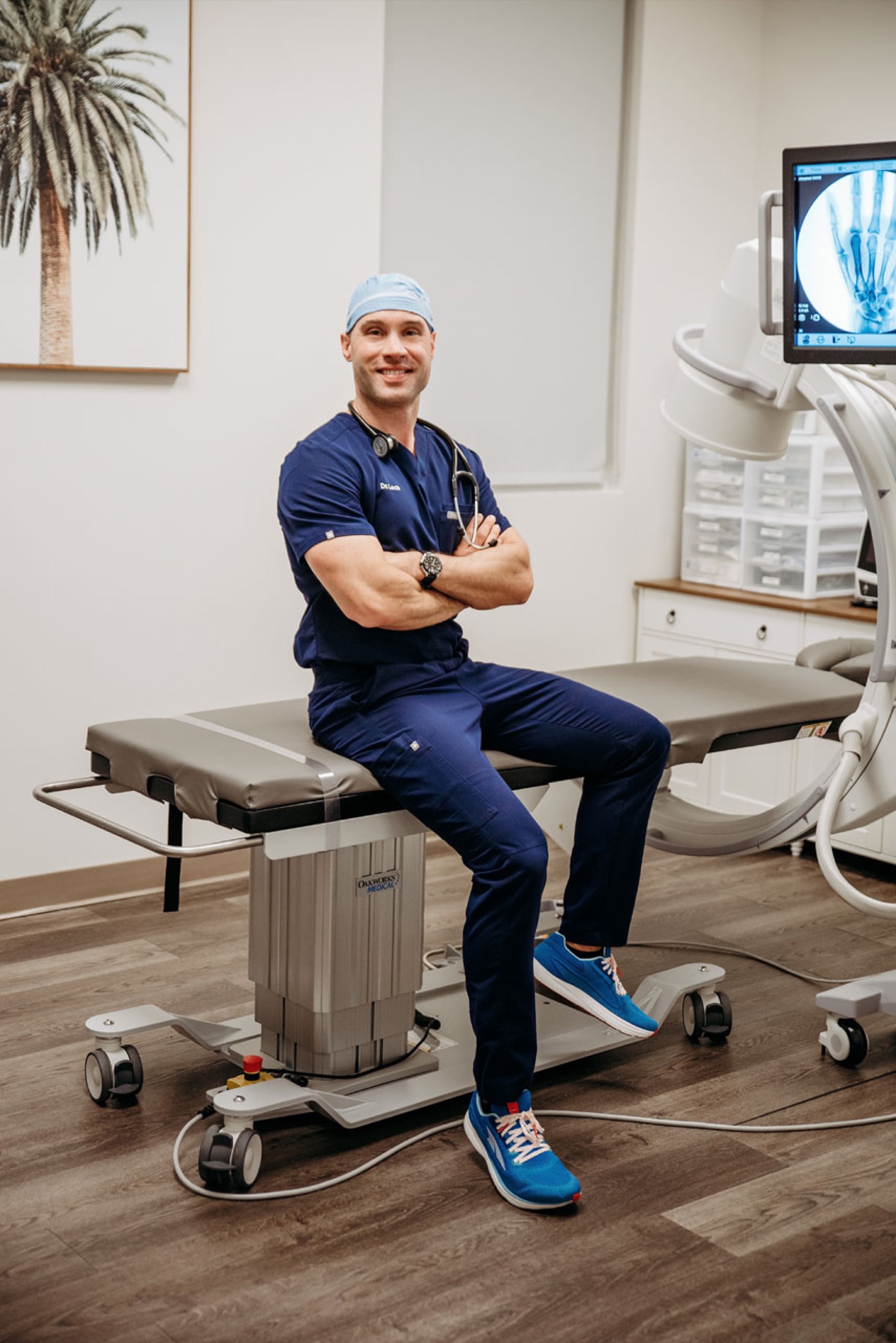
Positioned on the procedure table, skin numbed, needles placed under live X-ray. Dr. Loch tests each position with a small electrical stimulus to confirm the needle is on the sensory nerve and away from motor nerves before any heat is applied. The lesion itself takes a couple of minutes per site.
-
03
After
Home the same day. Expect some soreness in the treated area for up to a week or two — this is normal and settles.
-
04
Onward
Relief typically builds over two to six weeks as the treated nerves stop transmitting. It commonly lasts six to twelve months or longer, and can be repeated when the nerves regenerate.
Questions about this procedure
Why do I need blocks before the ablation?
Does it come back?
Will I lose strength or feeling?
Eliminate pain and reclaim your life.
Request an appointment with Dr. Loch, or call the office at (904) 750-3787. Most patients are seen within a week.