
Nerve pain
Pain that runs down the leg.
Sciatica is a description of where the pain travels, not a diagnosis. Treating it well means finding what is irritating the nerve and where.
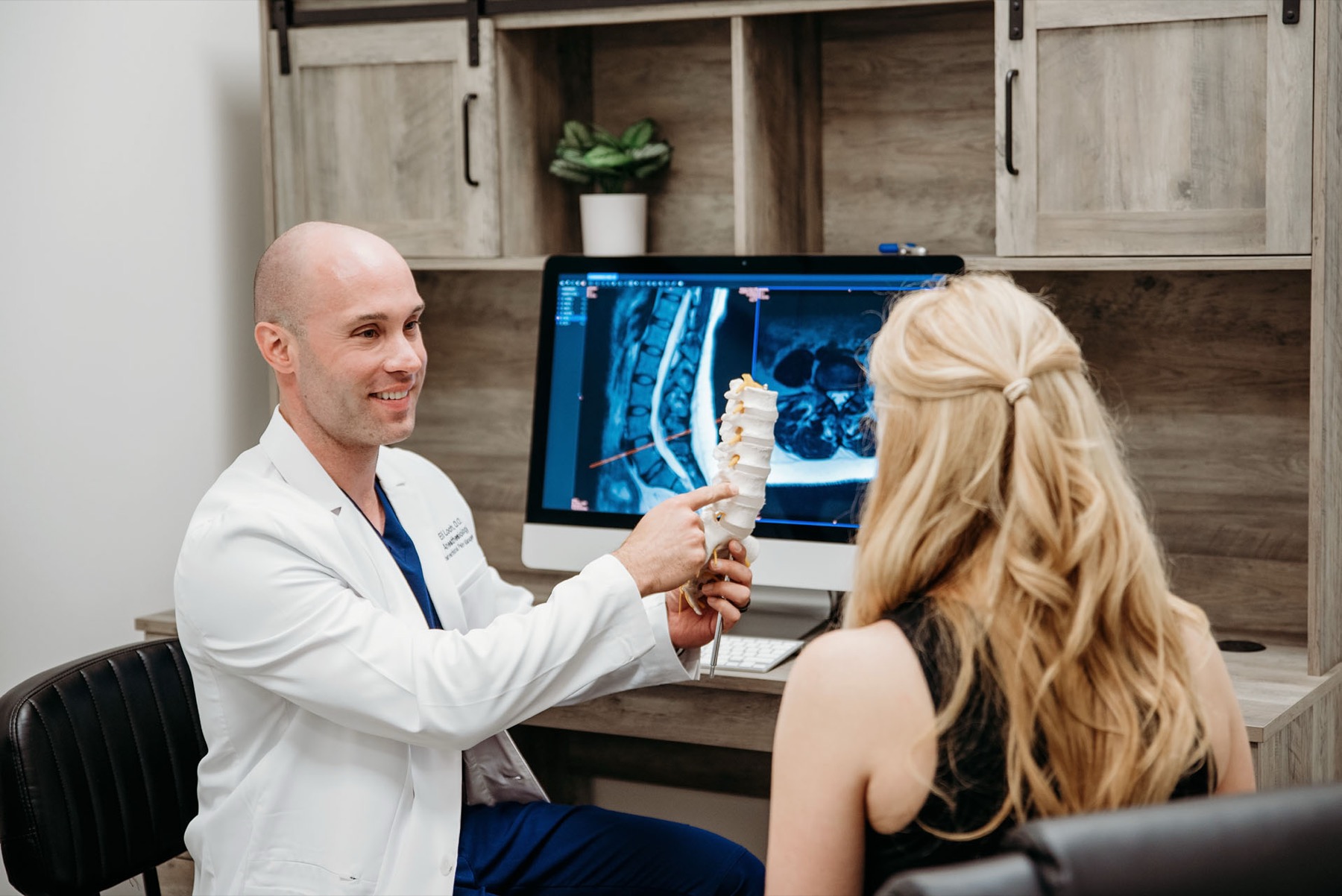
What sciatica actually is
Sciatica describes pain that follows the path of the sciatic nerve — from the lower back or buttock down the back of the leg, sometimes to the foot, often with numbness, tingling or weakness. The nerve itself is rarely the problem. Something is compressing or irritating it, and the treatment depends entirely on what and where.
The usual culprit is a herniated disc pressing on a nerve root as it leaves the spine. But spinal stenosis, a slipped vertebra, arthritis narrowing the exit canal, and compression further down in the buttock all produce leg pain that looks like sciatica on the surface and needs different handling underneath.
What we see
Signs worth taking seriously
- Pain that travels below the knee rather than stopping in the buttock
- Numbness or pins and needles in a specific band of the leg or foot
- Weakness — a foot that catches, difficulty rising onto the toes
- Pain that worsens with sitting, coughing or sneezing
- Symptoms that have lasted more than six weeks without improving
- Any loss of bladder or bowel control, or numbness in the groin — this is an emergency; go to hospital, do not wait for an appointment
How it works
How we localise it
-
01
Map the symptoms
Each nerve root supplies a predictable band of skin and set of muscles. Where you feel it and what is weak points to the level involved before imaging.
-
02
Confirm against imaging
MRI shows whether there is a herniation or narrowing at the level your symptoms predict. Agreement between the two is what makes a diagnosis solid.
-
03
Selective nerve root block if unclear
Where two levels are candidates, numbing one under live X-ray identifies which is producing the pain.
-
04
Treat the compression
Usually a targeted epidural steroid injection at the involved level, aimed at reducing the inflammation around the nerve so it can settle.
Treatment options
Epidural steroid injection
Placed at the specific level involved under live X-ray, to reduce inflammation around the compressed nerve root.
Learn moreSelective nerve root block
Diagnostic and therapeutic at once — identifies the level and often relieves it.
Learn moreSpinal cord stimulation
For persistent nerve pain in the leg that has not responded to injections or surgery.
Learn moreRegenerative therapy
Where degenerative change in the surrounding structures is contributing.
Learn moreIn their words
Patients treated for this
Dr. Loch has been the best doctor I have ever seen. He listens and takes the time to understand your issues and he works with you to develop a plan to get pain free. I came to Dr. Loch experiencing sciatic pain, tightness in my thighs and nerve pain running down my legs. With a combination of proposed exercises, low level medication and a cortisone shot I have the least amount of pain in over 2 years. His office is also efficient and the staff is very pleasant. I would recommend him to anyone needing pain relief.
Great experience from start to finish. Staff is super friendly and knowledgeable. Exceptional customer service. Dr. Loch is awesome at explaining everything and painting the full picture so I can make decisions based on my needs. Highly recommended. 11/10
I go to the top position and must’ve been but lots alike so that sits at the very top. I refer him to anybody. I know that’s in pain because I know he has the knowledge and skills to help him.
No reviews mention that treatment yet.
Questions we get asked
Will sciatica go away on its own?
Is an epidural injection the same as an epidural in labour?
How many injections will I need?
Can you treat sciatica during pregnancy?
Eliminate pain and reclaim your life.
Request an appointment with Dr. Loch, or call the office at (904) 750-3787. Most patients are seen within a week.