
Procedure
Diagnostic nerve blocks.
The most direct way to answer the question "is this structure the one producing your pain?"
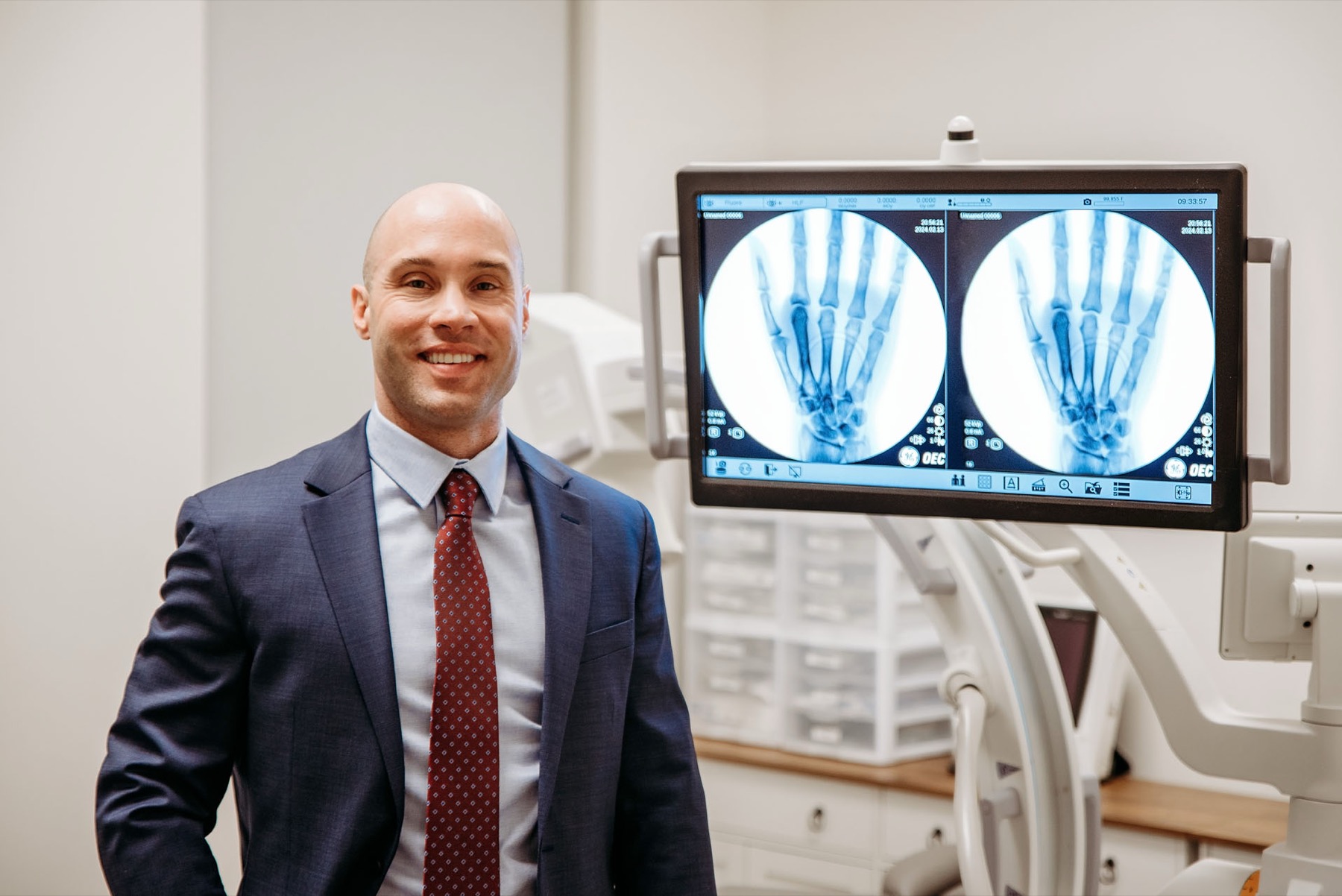
What it is
A diagnostic block places local anaesthetic precisely around a specific nerve or joint under image guidance. The logic is simple: if numbing that structure removes your pain for the duration the anaesthetic works, that structure is carrying the pain. If it does not, it is not — and we have ruled something out rather than guessed.
This is the tool that separates careful interventional pain management from trial and error. Imaging shows what structures look like. A block shows which one hurts.
Blocks are used both to identify a target before a longer-lasting treatment such as radiofrequency ablation, and as treatment in their own right where the anaesthetic and any accompanying steroid give lasting relief.
Candidates
Who this is for
- Back or neck pain where facet joints are suspected
- Buttock pain where the sacroiliac joint is a candidate
- Leg or arm pain where two nerve root levels are both plausible
- Focal nerve pain, including occipital neuralgia
- Anyone being considered for radiofrequency ablation
How it works
The appointment, step by step.
-
01
Before
Come with a clear sense of your usual pain level — you will be asked to rate it before and after, and that comparison is the entire point of the procedure.
-
02
During
Skin numbed, needle guided under live X-ray or ultrasound to the target, a small volume of anaesthetic delivered. Only a few minutes.
-
03
After
You will be asked to record your pain over the next several hours. Keeping an honest log matters more than it sounds — it is the data the next decision is based on.
-
04
The result
Meaningful relief during the anaesthetic window is a positive block and points to the treatment that follows. No change is equally informative and redirects the work-up.
Questions about this procedure
Why does the relief only last a few hours?
Why might I need two blocks?
Should I be active afterwards to test it?
Eliminate pain and reclaim your life.
Request an appointment with Dr. Loch, or call the office at (904) 750-3787. Most patients are seen within a week.